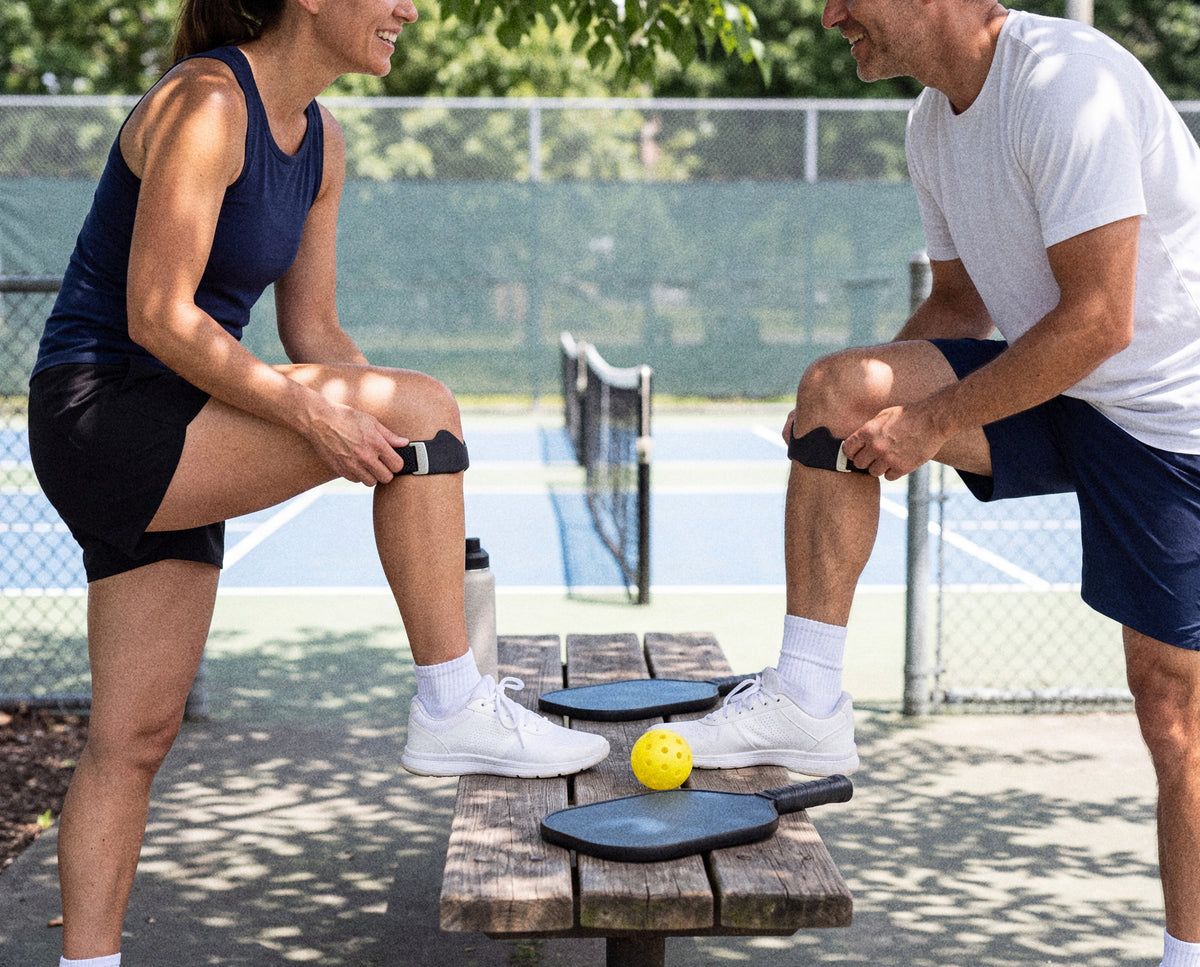
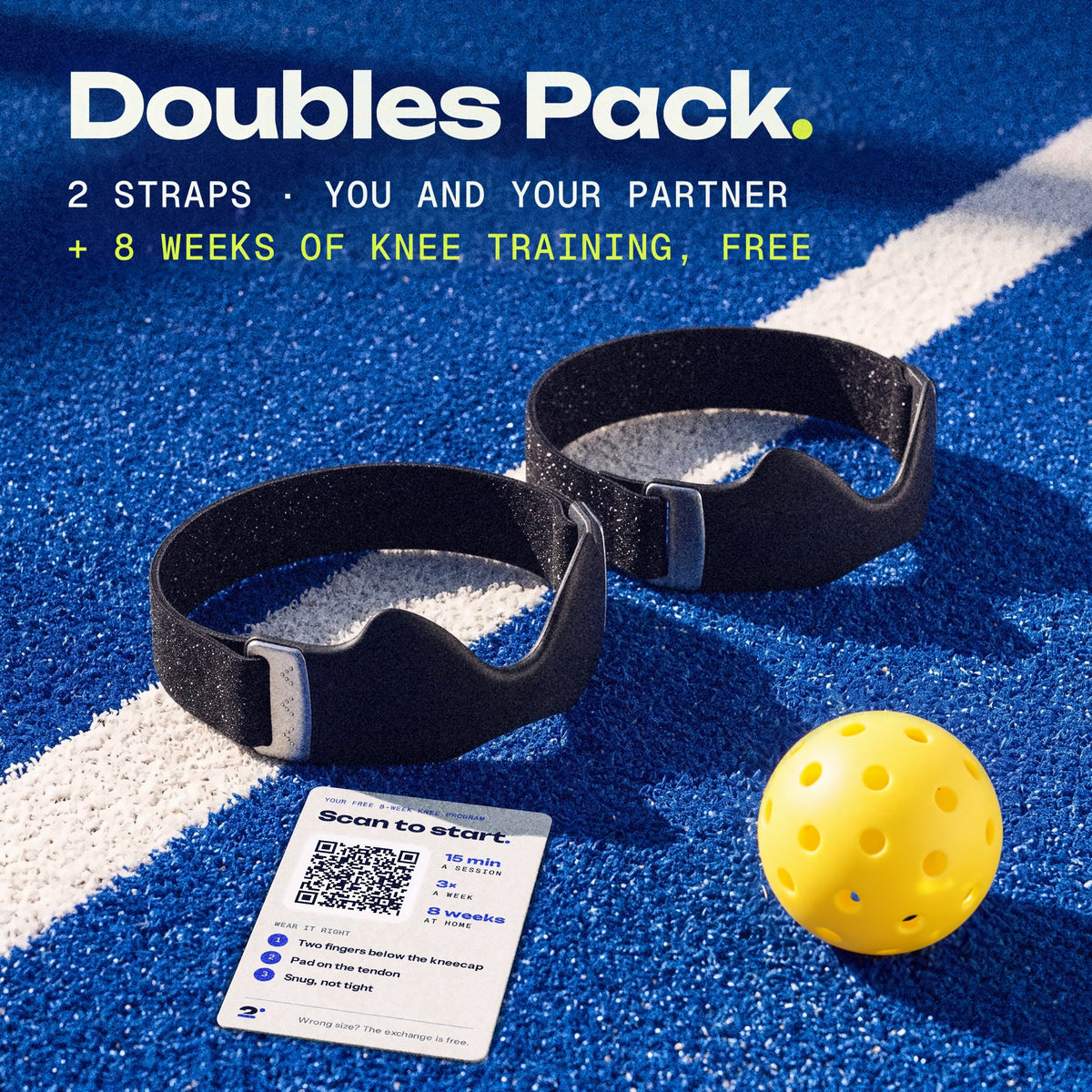
Why so many new pickleball players end up shopping for a knee strap
Some 24 million Americans played pickleball last year. The stop-and-go rhythm that makes it fun is also what your knees notice first.
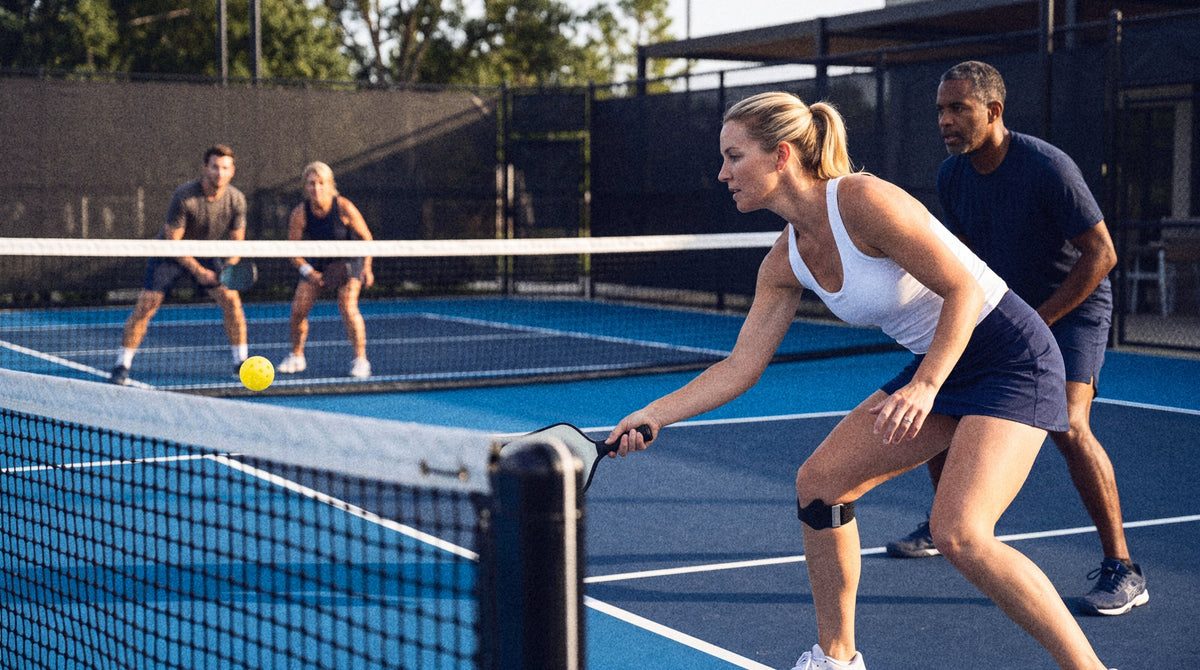
Pickleball keeps growing. About 24.3 million Americans played in 2025, up 22.8% in a year, and roughly 4.5 million of them picked up a paddle for the first time, according to the Sports & Fitness Industry Association.
That's great news. It also means a lot of knees going from zero to forty quick starts and stops an hour, often without much of a warm-up.
A sport of short bursts and hard stops
Most points are won at the kitchen line. Getting there means a burst forward, a split-step, a stop, a lunge for the dink. Repeat for two hours of open play. Many players say it's not during the game that they feel it, but on the stairs the next morning.
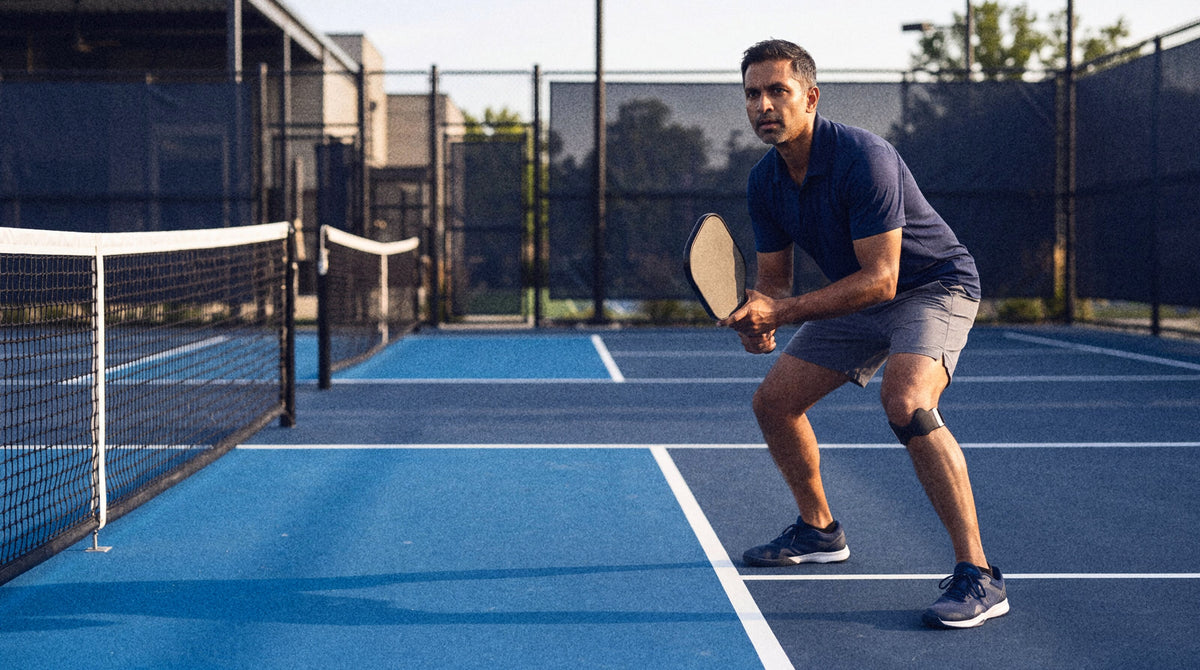
What experienced players do about it
- They warm up. Five minutes of side steps, easy split-steps and a few slow lunges before the first game.
- They build strength on rest days. Quads, glutes and hips do a lot of the work around the knee. Fifteen minutes, three times a week, adds up.
- They choose light support. Many go for a patellar strap: a slim band with a pad just below the kneecap that leaves the knee free to bend.
“Warm up, build strength, wear the right support. In that order.”
Strap, sleeve or brace?
A sleeve squeezes the whole knee and gets warm over two hours. A hinged brace is built for another job and is bulky under shorts. A strap puts a silicone pad on one spot, the tendon just below the kneecap, and stays out of the way of your game. Here is how the three compare.